For magazine publishers, the mission is clear: to inform, engage, and serve readers with content that reflects accuracy, quality, and professionalism. But as publishing continues to evolve to incorporate digital platforms, multimedia storytelling, and changing reader expectations, teams are being asked to do more than ever before.
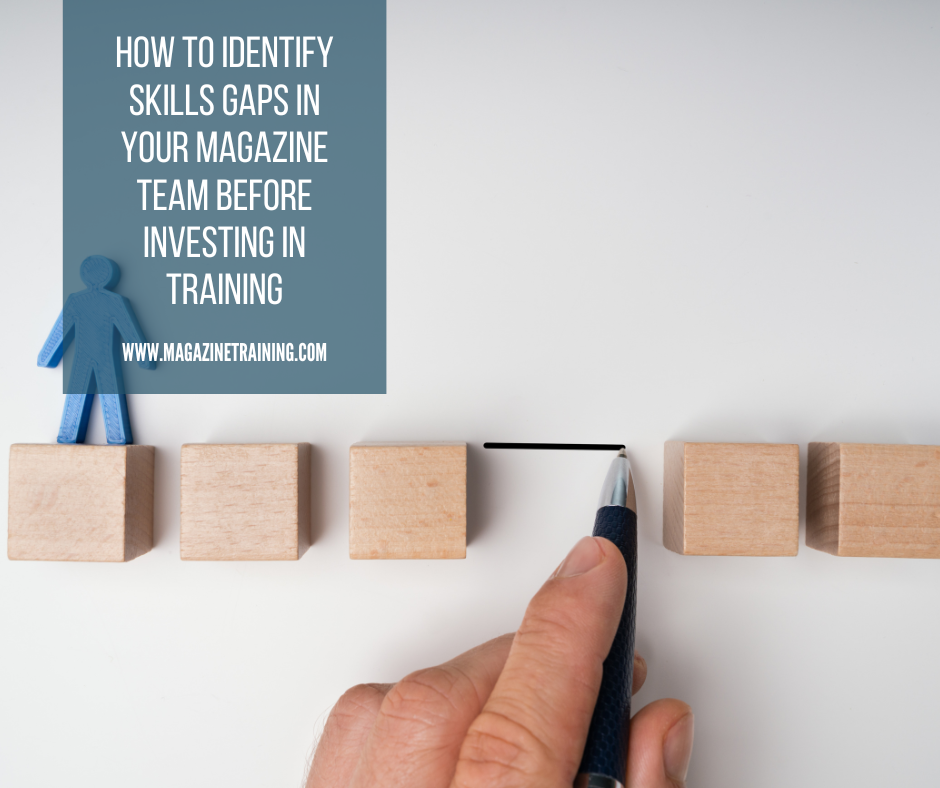
Training is often the natural response. Yet too often, organizations invest in training programs without first asking a critical question, “What skills are we actually missing?” Without clarity, even well-intentioned training can fall short.
Identifying skills gaps before making training investments ensures that every dollar, hour, and effort is aligned with both your editorial standards and your operational goals.
Start with your mission, not your tools
It can be tempting to begin by evaluating specific tools: analytics platforms, content management systems, or emerging technologies. But effective skills assessment begins elsewhere, with your publication’s goals. For magazine teams, those goals often include:
- Communicating information with clarity, accuracy, and integrity
- Engaging audiences across print and digital channels
- Expanding reach while maintaining editorial quality
- Supporting a consistent and credible reader experience
When these priorities are clearly defined, it becomes easier to evaluate whether your team’s current capabilities support them. For example, if your goal is to grow digital readership, do you have team members skilled in SEO, audience analytics, or multimedia content creation? If not, those gaps become immediately visible.
Take inventory of current capabilities
Before identifying what’s missing, you need a clear picture of what already exists within your team. This doesn’t require a complicated process. A structured internal assessment can reveal a great deal. Consider:
- Editorial strengths (writing, editing, subject matter expertise)
- Digital competencies (web publishing, analytics, social media strategy)
- Technical skills (CMS management, design tools, video production)
- Soft skills (collaboration, project management, adaptability)
In many cases, you may discover hidden strengths: team members who have untapped experience or interest in areas your organization hasn’t fully leveraged. Recognizing these capabilities can reduce the need for external training and allow for more strategic internal development.
Align skills with strategic goals
Not all gaps are equally important. The key is identifying which skills matter most based on where your publication is headed.
For example:
- A magazine expanding into podcasts will need audio production and storytelling skills.
- A publication prioritizing digital subscriptions may require stronger data analysis and user experience expertise.
- Teams exploring new workflows may need guidance in areas like generative AI training to better understand how emerging tools can support content creation while maintaining editorial standards.
By tying skills directly to strategic initiatives, you avoid generic training programs and instead focus on what will truly move your organization forward.
Use data to clarify the gaps
While intuition plays a role, data provides a more objective view of performance and needs.
Look at metrics such as:
- Website engagement and bounce rates
- Email open and click-through rates
- Content production timelines
- Social media reach and interaction
If engagement is low, the issue may not be volume but quality or targeting, pointing to a skills gap in audience analysis or content strategy. If production timelines are inconsistent, project management or workflow optimization may be areas for improvement.
Regular performance reviews and structured feedback from team members can also reveal where individuals feel underprepared or unsupported.
Involve your team in the process
Skills assessments should not feel like top-down evaluations. When team members are invited into the conversation, the results are often more accurate and actionable.
Encourage open dialogue by asking:
- Where do you feel most confident in your role?
- What areas would you like to develop further?
- What challenges are slowing down your work?
These conversations often uncover practical insights that data alone cannot provide. They also foster a culture of growth, where training is seen not as correction, but as investment.
Prioritize before you invest
Once gaps are identified, the next step is prioritization. Not every gap needs to be addressed immediately.
Consider:
- Which gaps directly affect audience engagement, content quality, or operational efficiency
- Which skills will deliver the greatest return on investment
- Which areas can be addressed through internal mentoring versus formal training
This approach ensures that training resources are used strategically rather than reactively.
Build a culture of continuous development
Skills gaps are not a one-time issue; they evolve alongside your organization and the broader publishing landscape.
By regularly assessing capabilities and aligning them with your goals, you create a system where growth is ongoing rather than occasional. This is particularly important in a field where technology, reader behavior, and content expectations continue to shift.
For publishers, a commitment to development is both practical and strategic. Strengthening your team’s skills ultimately strengthens your ability to communicate effectively, reach wider audiences, and steward your platform with excellence.
Moving forward with clarity
Investing in training without understanding your team’s needs is like setting out on a journey without a map. But when you take the time to identify skills gaps – grounded in your goals, informed by data, and shaped by your team’s input – you gain clarity.
That clarity leads to smarter investments, stronger teams, and more meaningful impact.
And in a publishing environment where equality, readability, and audience trust matter, that impact is worth getting right.
By Anne Fernandez, Ascendient Learning
Author bio: Anne Fernandez is the Digital Marketing Manager at Ascendient Learning, which provides training courses and certification programs that upskill and reskill individuals, teams, organizations and governments to be ready for what’s next. Fernandez has more than a decade of experience in content strategy, digital advertising, and SEO. She holds certifications in Google Ads, Google Analytics, and Digital Media and Marketing. Fernandez earned her OMCP (Online Marketing Certified Professional) credential through Duke University in 2021 and continues to lead innovative marketing projects that grow visibility and engagement for Ascendient Learning.
Related posts
Magazine Training International’s mission is to encourage, strengthen, and provide training and resources to Christian magazine publishers as they seek to build the church and reach their societies for Christ.