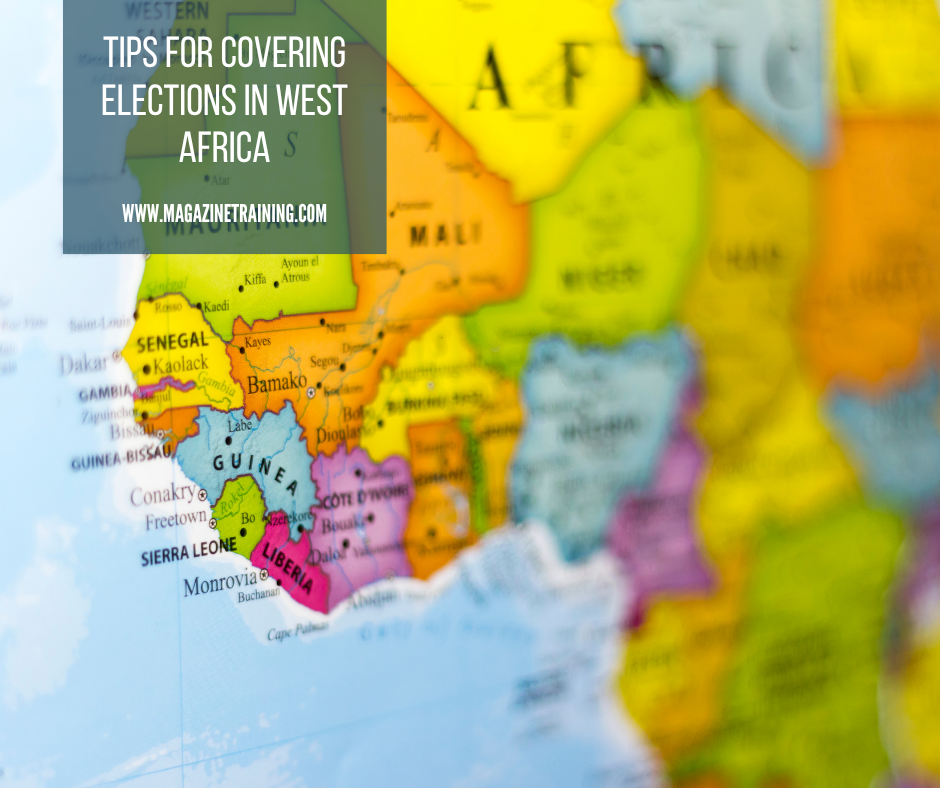
Violence, ballot box snatching, mis- and disinformation, vote buying, voter apathy and voter suppression have marked many of the West Africa’s elections. In many of the countries, journalists have been attacked and pressured to favor a particular political party or candidate in their coverage.
Here are some tips for journalists as they embark on their coverage:
Be apolitical
Many media outlets in West Africa are owned by politicians and push partisan content. Journalists should strive not to allow media ownership to influence their coverage, and detach their own political sentiments or personal biases from their reporting. Every report filed before, during and after an election should remain neutral, devoid of support to a particular party or candidate.
“Your job is to report the facts, not to support or undermine any candidate,” advised Ridwan Dini-Osman, a Ghanaian journalist who covered the 2016 and 2020 presidential elections in his country.
Beninese journalist Loukoumane Worou Tchehou cautioned that journalists should steer clear of aligning with political actors and “avoid waging political war by proxy” in their election coverage, referring to the practice of aiding a given political candidate through smear campaigns on their opponent.
It’s best to stick to reporting the facts. “No matter what’s going on around you, always come back to the facts. Focus on verified information like official results, statements and policies,” said Dini-Osman. Include a diversity of perspectives in your reporting, too, he continued. “It’s important to cover all sides of the story. If you’re quoting one candidate, make sure to include what their opponent is saying. Even if a side is controversial, their voice still needs to be heard to give a full picture.”
Know your rights, and the rules
Journalists should familiarize themselves with their legal rights by reading what’s stipulated in their country’s constitution and electoral code, advised Mayowa Oladeji, a reporter at Ripples Nigeria who has covered presidential and state government elections in Nigeria. Knowing these rules before election day will help avoid future issues that could impede reporting.
Journalists should also check for information from bodies that oversee elections on accreditation ahead of election day. For instance, the Ghana Journalists Association and the Electoral Commission of Ghana announced an application period with instructions for media outlets to obtain accreditation to cover the upcoming December election.
Fact-check all information
To avoid spreading misinformation that can inflame tensions during an election, journalists should take extra care to ensure the authenticity of statements, photos, videos and statistics used in their articles. Even when under pressure from an editor to meet a deadline, verifying information and quotes is imperative.
by
Related posts
Magazine Training International’s mission is to encourage, strengthen, and provide training and resources to Christian magazine publishers as they seek to build the church and reach their societies for Christ.