On March 9, 2024, John Barnett was found dead in his car in Charleston, South Carolina, from what the county coroner called a self-inflicted gunshot wound. In the days before his death, Barnett had been giving evidence in a whistleblower trial against the Boeing aircraft company.
While it’s impossible to know for certain what led to the apparent suicide, Barnett’s mother said in an interview with CBS News that she partly blamed Boeing for her son’s death. She said Barnett was despondent over the company’s relentless targeting of him over his accusations that it had deliberately ignored safety issues at the plant where he worked.
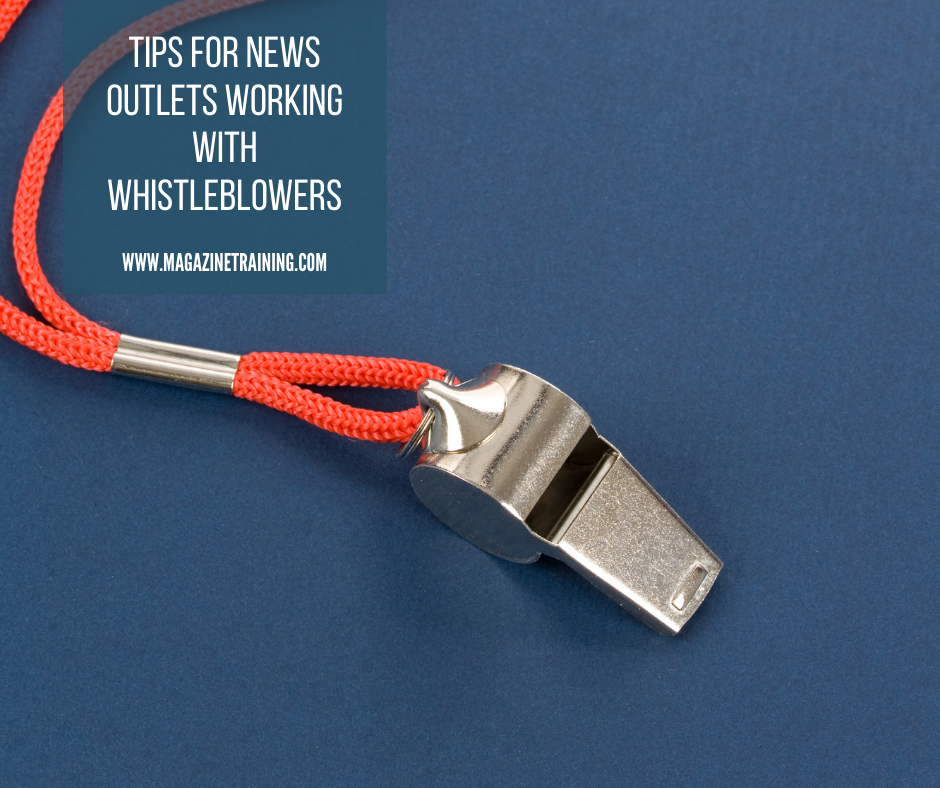
The tragedy highlights another issue as well: the ethical responsibilities of news media who report on whistleblower allegations. Barnett’s death may be an extreme case, but other whistleblowers have spoken publicly over the past year about how talking to the media has left them unemployed, broke, targeted, ostracized and depressed.
The trauma of whistleblowing
On panels at the Online News Association conference in August and the Knight Media Forum in February, four prominent whistleblowers spoke about their experiences dealing with the media – some positive and some negative. They said journalists need to understand how traumatic whistleblowing can be.
“Journalists hit publish on the story and move on to the next one. When you’re the whistleblower, when that story gets published, that’s when your story really starts,” said Anika Collier Navaroli, a former Twitter safety expert who exposed secret information about the platform’s role in the Jan. 6, 2021, Capitol insurrection. “And one of the hardest consequences of having to do it is to pick up the pieces afterward. To say, ‘I just blew up my entire life. I blew up my entire career. What do I do now?’”
The Signals Network, a non-profit based in the U.S., was established in 2017 to help whistleblowers deal with the legal, financial and psychosocial consequences of taking action. Signals can also be helpful to media organizations that publish information from whistleblowers, said Executive Director Delphine Halgand-Mishra.
“We provide the support to the whistleblowers, and the journalists can focus on their work. We can play the role of legal support so the journalist does not have to do that – which they can’t for ethical reasons.”
The Signals Network provided direct support to 45 whistleblowers in 2023, and now receives about two requests for help per week, Halgand-Mishra said. The organization also advocates for better laws to protect whistleblowers, which ultimately helps journalists who depend on those sources to reveal wrongdoing. The EU passed a directive to better protect whistleblowers in 2019, and a federal shield law that would protect journalists and their sources has passed the U.S. House and is awaiting action in the Senate.
How to protect whistleblowers
Here are some ways that journalists can get the vital stories only whistleblowers can provide while minimizing harm to those who are taking a big personal risk to expose wrongdoing.
- Treat the whistleblower with sensitivity, understanding that while this story could help advance your career, it could be the end of a career for the whistleblower. Mark McGann, the main source behind the Uber Files revelations, said he dealt with some unethical journalists, but his initial contact with a journalist from the Guardian set an excellent standard: “He talked about me, my well-being, did I have a family, how was my health? If I was going to go forward with this, were there safety mechanisms that could be put in place so that I would be protected?”
by
Related posts
Magazine Training International’s mission is to encourage, strengthen, and provide training and resources to Christian magazine publishers as they seek to build the church and reach their societies for Christ.