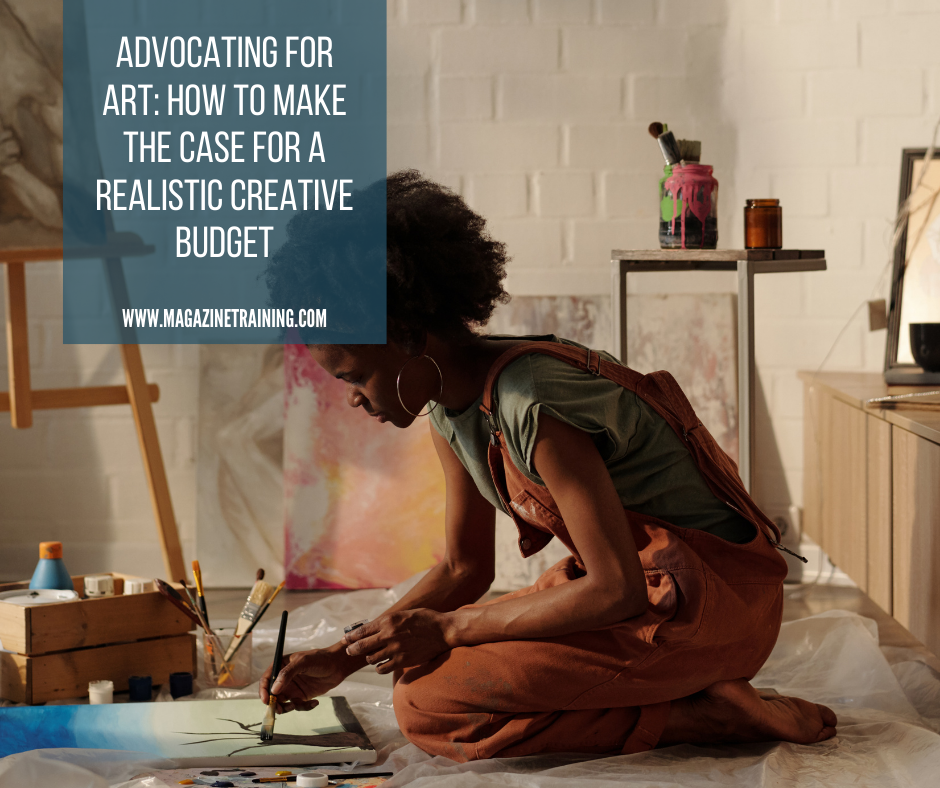
Producing beautiful imagery is only part of a creative’s role. The workshop emphasized that designers and editors must also learn how to advocate for the value of their work. Without advocacy, even the strongest ideas struggle to survive budget conversations.
“If you don’t explain the value of visuals, someone else will decide they don’t have any.”
Why art budgets are often undervalued
Art is often viewed as decoration instead of communication. When budgets shrink, visuals are treated as optional—even though imagery shapes first impressions, builds trust, and influences whether content is read at all.
The workshop reframed visuals as a strategic tool, not a luxury.
What a reasonable budget really includes
A realistic art budget includes more than final output:
- Concept development time
- Image sourcing or creation
- Editing and revisions
- Tools, subscriptions, or licenses
“When time is ignored as a cost, burnout becomes inevitable.”
Speaking the language of impact
Effective advocacy focuses on outcomes, not aesthetics. When making the case for budget, connect visuals to:
- Reader engagement
- Brand consistency
- Message clarity
- Organizational credibility
“Leadership doesn’t fund aesthetics—they fund outcomes.”
FAQ
What if leadership still won’t increase the budget?
Work within constraints, but clearly document limitations and results.
Is advocacy part of a creative’s role?
Yes. Advocacy protects quality, sustainability, and team health.
**This is based on the workshop “The cost of art: How to produce beautiful imagery on a budget” presented by Sarah Gordon. You can watch the full workshop on-demand for free.**
Related posts
Magazine Training International’s mission is to encourage, strengthen, and provide training and resources to Christian magazine publishers as they seek to build the church and reach their societies for Christ.