Non-white sources are underrepresented in news coverage. Although not a well studied issue, as many of the reports on diversity in media focus on newsrooms, but when tracked the problem emerges.
When NPR began monitoring the diversity of its sources in 2013, it found that 77% of them were white. Since calling attention to the problem, NPR has increased their non-white sources to 39% in the most recent report from 2021, still short of the 43% of the country that identifies as a person of color.
Today, even as the internet has made finding sources for journalists significantly easier, in the U.S. they remain predominantly white. Algorithms are partly to blame as they push journalists toward people that have already been quoted on different topics, but so too is journalists’ habit of returning to sources they already know, again and again. In my career as a journalist, a guest booker for TV news, and as an events producer, I’ve been guilty of this pattern myself.
When the media covers marginalized communities but fails to include members of those communities in their reporting, trust in media falls, according to a 2023 Pew Research survey on Black Americans’ experiences with the news. More than half of respondents cited the inclusion of more Black sources as a way to make reporting on Black people more fair.
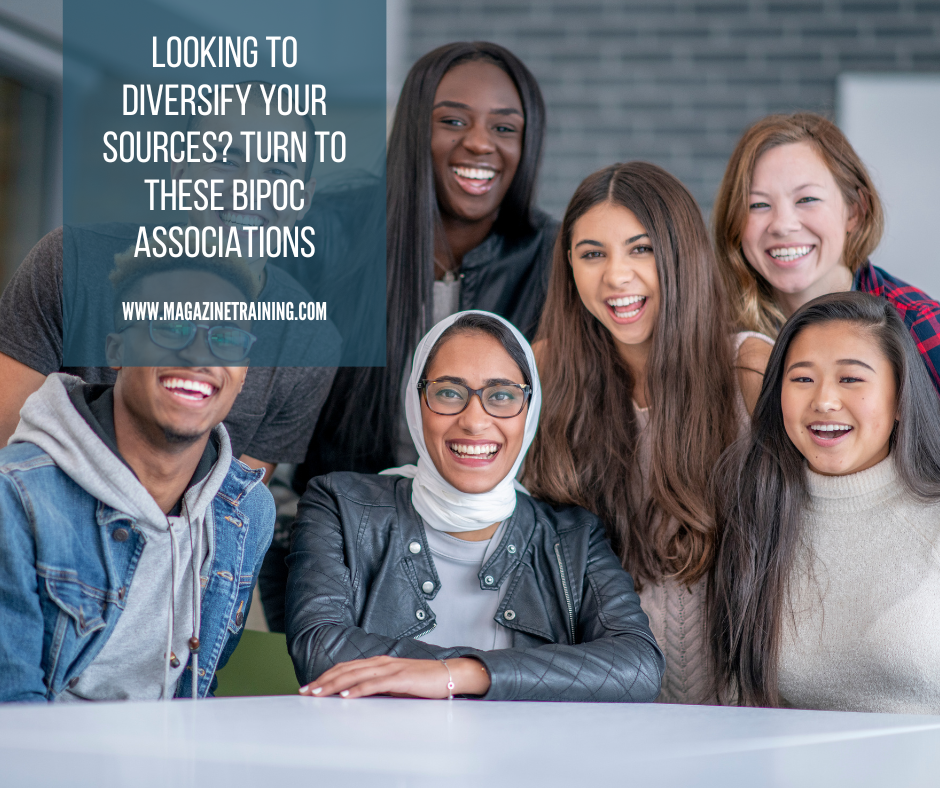
Journalists should actively reach out to BIPOC (Black, Indigenous, and People of Color) sources when reporting on their communities. They should seek out BIPOC sources when covering topics beyond race, too.
Fortunately, there’s an easy way to diversify sources: for nearly every field of expertise there’s a professional association – a group designed to network, lobby, educate and inform about the profession.
In many cases, there exist smaller professional associations specifically for BIPOC professionals. The executive boards of these associations are composed of BIPOC experts, and they also often host conventions, symposiums, and other events that bring together experts in their respective fields. As an added bonus, many of these associations have dedicated media contacts as well.
Reaching out to these associations can help journalists diversify the sources they interview. Here are a few to consider in fields commonly covered by journalists:
Health and health care
Doctors have a number of professional organizations to reach out to, including the well-known and oft-quoted American Medical Association. But why not reach out to the National Medical Association (NMA), too?
NMA, a “collective voice of African American physicians and the leading force for parity and justice in medicine and the elimination of disparities in health,” offers an opportunity to contact Black sources in the medical field. Like most health organizations, NMA publishes news releases on major health issues, and media contact information can be found in them.
The Association of American Indian Physicians, the National Council of Asian Pacific Islander Physicians and the National Hispanic Medical Association all share similar missions for their respective communities. These organizations have a robust social media presence, where they highlight key voices on relevant topics that are frequently left out of the conversation.
by
Related posts
Magazine Training International’s mission is to encourage, strengthen, and provide training and resources to Christian magazine publishers as they seek to build the church and reach their societies for Christ.