
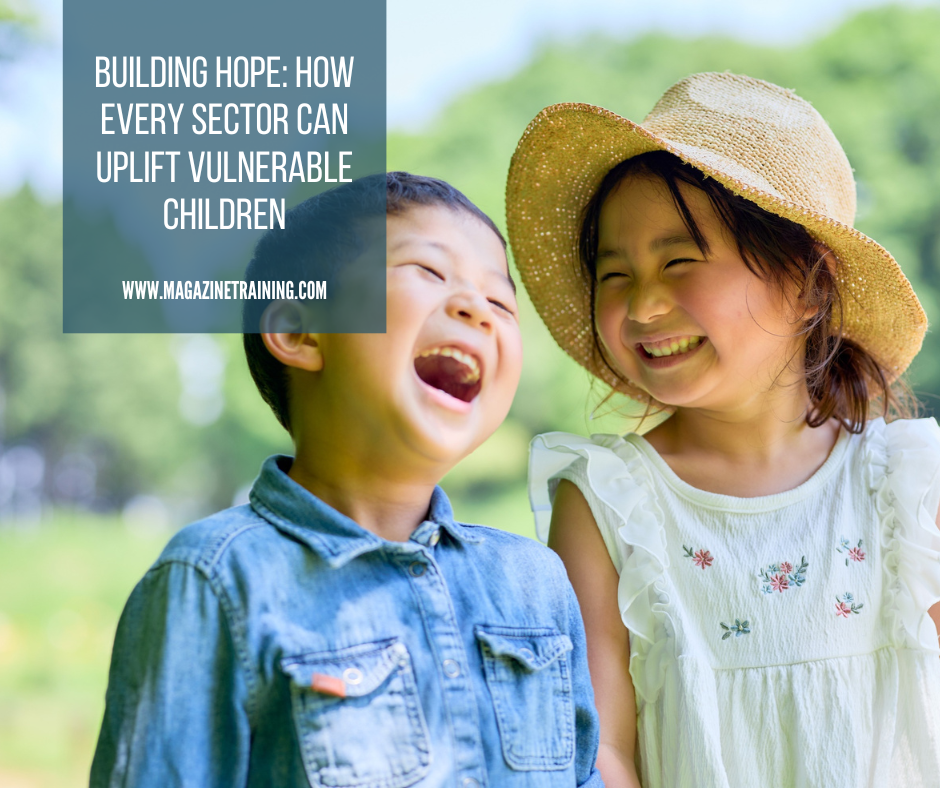
Around the world, millions of children face challenges that limit their potential—poverty, neglect, displacement, or lack of access to education and healthcare. Yet, individuals and institutions across all sectors have immense power to change that story. By combining empathy with action, every person and organization can help build safer, more nurturing environments for vulnerable children.
TL;DR
This article explores diverse pathways—spanning individuals, nonprofits, businesses, schools, and healthcare organizations—to uplift vulnerable children. From community advocacy to educational reform and corporate partnerships, we unpack how strategic compassion can create lasting impact.
Expanding possibilities through education
Education remains the most powerful lever for transformation. Teachers, mentors, and educational institutions can ensure that children in difficult circumstances not only learn but thrive. Schools can adopt trauma-informed practices, create inclusive classrooms, and provide access to mental health resources.
Healthcare programs also offer unique options for professionals who want to make an impact through child welfare and development. Programs such as the RN to BSN Nursing Bachelor’s Program empower nurses to expand their scope of care, strengthening child health outcomes within families and communities.
How different sectors can help
| Sector | Role | Example Action |
| Individuals | Mentorship & Advocacy | Volunteer with local child-advocacy centers or start community reading programs. |
| Businesses | Corporate Responsibility | Launch initiatives that fund youth development or provide family-friendly employment policies. |
| Nonprofits | Direct Service & Policy | Deliver after-school care, legal support, or foster-parent training programs. |
| Schools | Education Equity | Partner with community groups to ensure access to technology and learning materials. |
| Governments | Systemic Reform | Strengthen child protection laws and increase funding for early childhood programs. |
Each group plays a unique role, but their combined impact can transform social structures into safety nets.
How-to: Start a child advocacy initiative
- Define Your Cause:
Focus on one area—health, education, safety, or emotional wellbeing. - Build Partnerships:
Collaborate with local organizations, schools, and health networks.
(Resource: GlobalGiving) - Secure Funding:
Explore community grants or CSR partnerships through programs like UNICEF. - Engage the Community:
Use storytelling and data to inspire participation. - Measure Impact:
Track children served, awareness raised, or systemic changes achieved.
Additional pathways to explore
- Digital Literacy Programs: Platforms like org offer free coding lessons, helping children gain future-ready skills.
- Health and Nutrition Initiatives: Join Feeding America to address food insecurity.
- Education for All: Collaborate with Save the Children to support at-risk learners worldwide.
- Child Safety Networks: Engage with the National CASA/GAL Association to advocate for children in the legal system.
- Global Health Collaborations: Support child vaccination programs through WHO’s Immunization Agenda.
FAQ
Q1: Why focus on vulnerable children when global issues abound?
Because children represent the future—and supporting them creates generational change.
Q2: Can small actions really make an impact?
Absolutely. Mentorship, donations, and advocacy can transform one child’s life—and that ripple spreads.
Q3: What’s the best way for businesses to get involved?
Start with employee volunteer programs and partnerships with reputable child welfare organizations.
Q4: How do schools contribute beyond education?
By creating inclusive, safe environments and connecting families to support networks.
Q5: What role does technology play?
Digital access can bridge opportunity gaps—offering learning, telehealth, and social connection to isolated children.
Glossary
Vulnerable Children: Those facing heightened risk due to poverty, trauma, neglect, or displacement.
Trauma-Informed Education: Teaching that considers emotional and psychological safety.
Corporate Social Responsibility (CSR): A business model that promotes social and environmental wellbeing.
Child Advocacy: The act of speaking or acting on behalf of children’s rights and welfare.
Mentorship: A relationship where an experienced person guides a child’s personal or professional growth.
Product with purpose
One inspiring example of innovation and compassion is Good360, a logistics platform connecting companies with nonprofits to distribute essential goods. Their model demonstrates how technology and business can jointly uplift communities—especially children in need.
Conclusion
Every child deserves safety, education, and opportunity. Whether through volunteering, advocacy, teaching, or strategic partnerships, the pathway to impact is wide open. When individuals, institutions, and businesses align around compassion, the result is not just charity—it’s systemic change, ensuring that no child is left behind.
Discover how Magazine Training International can empower your Christian publishing journey with expert-led training and resources—visit magazinetraining.com to learn more!
Related posts
Magazine Training International’s mission is to encourage, strengthen, and provide training and resources to Christian magazine publishers as they seek to build the church and reach their societies for Christ.